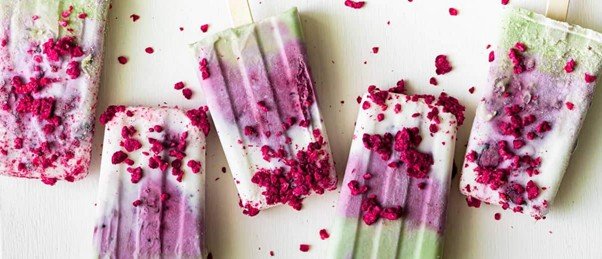
Source: toufood.com
Freeze-drying, also known as lyophilisation, begins with an essential first step: extremely rapid freezing. The product is frozen to around –40°C or even lower to ensure that all the moisture inside turns into solid ice.
This prevents the cells from bursting and preserves the structure. The faster this stage takes place, the more accurately the food’s natural “portrait” – its appearance and flavour – is preserved.
Freezing acts like a pause button, stopping biological reactions in their tracks, ensuring that the product remains almost identical to when it was freshly picked or prepared. The benefits are obvious.
Sublimation – the moment ice turns into vapour
Sublimation is the most important stage of freeze-drying. The process starts when the product is placed in a vacuum chamber, where the pressure is significantly reduced. Rather than melting into liquid, the ice crystals turn directly into vapour and are extracted directly from within the product. This means that there is no moment when water flows through the cells and damages their structure.
Sublimation is a gentle yet remarkably powerful process, capable of removing 95–99% of the water content. The result is food that remains exceptionally light and crisp with an intensely concentrated flavour.
How Is Freeze-Drying Different from Conventional Drying?
| Process | Conventional Drying (Heat) | Freeze-Drying (Lyophilisation) |
| Temperature | 40–70 °C | –40 °C and below |
| Structural change | Shrinks; fruit becomes tough or overly soft | Remains almost identical to the fresh product |
| Vitamin retention | 40–60% | 80–95% |
| Flavour | Can be milder, sometimes caramelised | Highly intense and natural |
| Texture | Hard, chewy | Light, crisp and porous |
| Shelf life | Moderate | Exceptionally long (up to several years) |
| Weight | Slightly reduced | Reduced by up to 90% |
| Additives | Sometimes used | Not required |
What happens to vitamins and nutrients?
Freeze-drying is considered one of the gentlest methods of preserving food. Since no high temperatures are used, vitamins, minerals, and natural pigments remain largely unchanged. Numerous studies show that freeze-dried products can retain up to 90% of their nutritional value. This is why freeze-dried berries remain so aromatic and vividly coloured. Their composition is almost identical to that of fresh berries, except without the water. Nutrients remain stable and oxidation is minimal because moisture, the primary cause of spoilage, has been removed.
Flavour, aroma and texture
Water can dilute or soften certain natural flavours, but when it is removed through freeze-drying, the flavour compounds become noticeably more concentrated. The brief aroma released by a fresh strawberry is preserved almost perfectly during the process. Unlike conventionally dried products, freeze-dried pieces have no scorched or caramelised notes as they are never exposed to high heat.
The texture remains naturally porous, giving the product a light, crisp texture. Children enjoy it as a fruity snack, while chefs appreciate its versatility as an ingredient that absorbs moisture beautifully and swiftly returns to its original form.
What does this process mean for everyday nutrition?
Thanks to their extremely low moisture content, freeze-dried products have an exceptionally long shelf life. They can be stored for years without losing flavour or quality. This stability offers real flexibility, allowing you to enjoy the quality of fresh ingredients all year round, regardless of the season.
This is particularly valuable for families, hikers, and anyone who wants a healthy, natural snack at any time. The Harvest Right PRO home freeze dryer from FreezeDry.lt makes it easy to prepare freeze-dried fruits and vegetables that are perfect not only as snacks, but also as ingredients for breakfasts, desserts or soups. They instantly absorb moisture and return to a just-picked freshness.
Freeze-drying: a tool for the modern kitchen
Professional chefs often describe freeze-drying as “the new generation of seasoning”. It opens the door to bolder flavour contrasts, natural colouring using fruit and vegetable powders, and entirely new textures for desserts.
In the home kitchen, it is a practical way to keep healthy ingredients ready to use with no extra preparation required. This innovative process enables consumers to opt for a cleaner preservation method with no additives, while enhancing the flavour, colour and shelf life of food.


