Source: elena.pl
For years, freeze-dried food was associated with hiking, expeditions and even space travel. Today, however, they are carving out a new place much closer to home: children’s everyday nutrition. More and more parents are choosing them for two simple reasons: they contain only clean ingredients, and they have an authentic, natural taste that doesn’t resemble sweets or artificially flavoured snacks.
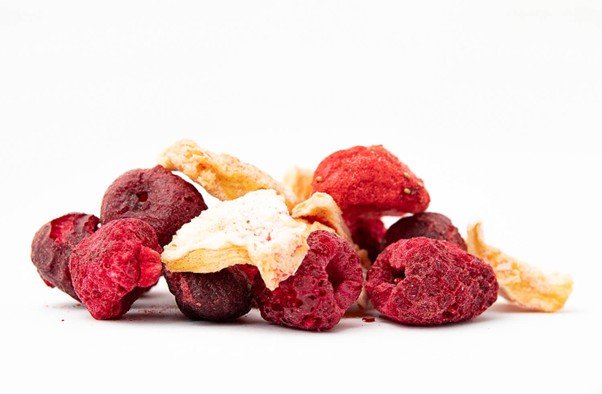
Using FreezeDry.lt equipment, fruit and vegetables retain most of their valuable nutrients, providing a smart alternative when fresh produce is unavailable. Children are immediately drawn to them – they are light, crunchy and fun to eat, and feel like a treat, yet deliver the goodness of real fruit and vegetables.
Are freeze-dried products safe for children?
This is one of the most common concerns for parents, yet the freeze-drying process itself is harmless. It removes moisture at very low temperatures, meaning there is no need for preservatives, added sugar or other additives that are often used to extend shelf life. Scientific research also supports the nutritional value of food prepared in this way.
As the method does not destroy the product’s structure, fruit and vegetables remain “real” — simply lighter and crisper. The key is to choose products with no added ingredients, ideally made from 100% fruit or vegetables. With this clean composition, they can be suitable for young children too, provided they are served in accordance with the age recommendations to reduce the risk of choking. For toddlers, it is advisable to crush or grind them into smaller pieces, while older children can enjoy bite-sized pieces independently.
When do freeze-dried snacks become a practical choice?
One of the biggest challenges is finding convenient ways to incorporate fresh fruit and vegetables into your diet when you’re travelling, dropping the kids off at nursery or waiting for after-school activities to finish. Freeze-dried products do not become mushy or spoil quickly, and they do not require refrigeration, making them an excellent choice for busy parents. They are also ideal for lunchboxes. Children love the bright colours and crunchy texture, while parents can feel confident about the clean ingredient list.
They can even help to encourage picky eaters to try new foods. Children often accept freeze-dried pieces as an exciting new texture, encouraging them to try fruits they would usually refuse in their fresh form.
What really happens to food during freeze-drying? What is lost and what is preserved?
| Food Component | Change | Explanation |
| Water | ~95–99% removed | Water transitions directly from ice to vapour without passing through the liquid phase |
| Vitamins | Majority retained | As no heat is used, sensitive vitamins (such as C and B group) remain stable |
| Flavour | Intensifies | With water removed, flavour compounds become more concentrated |
| Aroma | Remains almost identical | Sublimation does not damage aromatic compounds |
| Colour | Stays natural | No heat means pigments are not broken down |
| Texture | Becomes crisp and light | The porous structure allows the product to quickly rehydrate |
| Nutritional value | Largely unchanged | One of the preservation methods that causes the least nutritional loss |
How to use freeze-dried products in children’s nutrition?
Freeze-dried fruit and vegetables can be used for more than just snacks. They can become a versatile ingredient in breakfast porridge, yoghurt, or smoothies as they quickly regain their natural texture when combined with moisture.
Blueberry or strawberry powder can replace the artificial colourings often found in shop-bought products, enabling parents to make porridge or cottage cheese cream that is both bright and colourful without adding sugar. Stir crunchy pieces of fruit into pancake mix to add natural sweetness with no extra additives, and children will enjoy what feels like a treat but is genuinely wholesome.
Freeze-dried products are also a practical way to boost vitamin intake during phases when little ones refuse certain fresh fruits or vegetables, helping to maintain variety in a child’s diet without pressure or compromise.
What should you look for when choosing freeze-dried snacks for children?
When selecting freeze-dried snacks for children, parents should consider three key factors: the ingredients, the size of the pieces, and the child’s age. The younger the child, the smaller the pieces should be to minimise the risk of choking. It is best to avoid products with added sugar, flavourings or coatings. Ideally, a genuine freeze-dried product should contain just one ingredient.
Another advantage is the long shelf life, making it easy to keep a supply of snacks at home, in the car or in a handbag – always ready when needed.
Freeze-drying: a healthier snacking habit
Snacks play an important role in children’s daily diets. They help shape long-term eating habits. If natural, minimally processed options are introduced from an early age, children are more likely to accept fruit and vegetables as normal parts of their routine. Thanks to their intense flavour, freeze-dried products can provide a tempting alternative to sweets and may even help to reduce added sugar intake.
When high-quality products are chosen, freeze-drying becomes a practical way to balance taste and nutrition, and remains a fun, colourful, satisfyingly crunchy experience for children.


