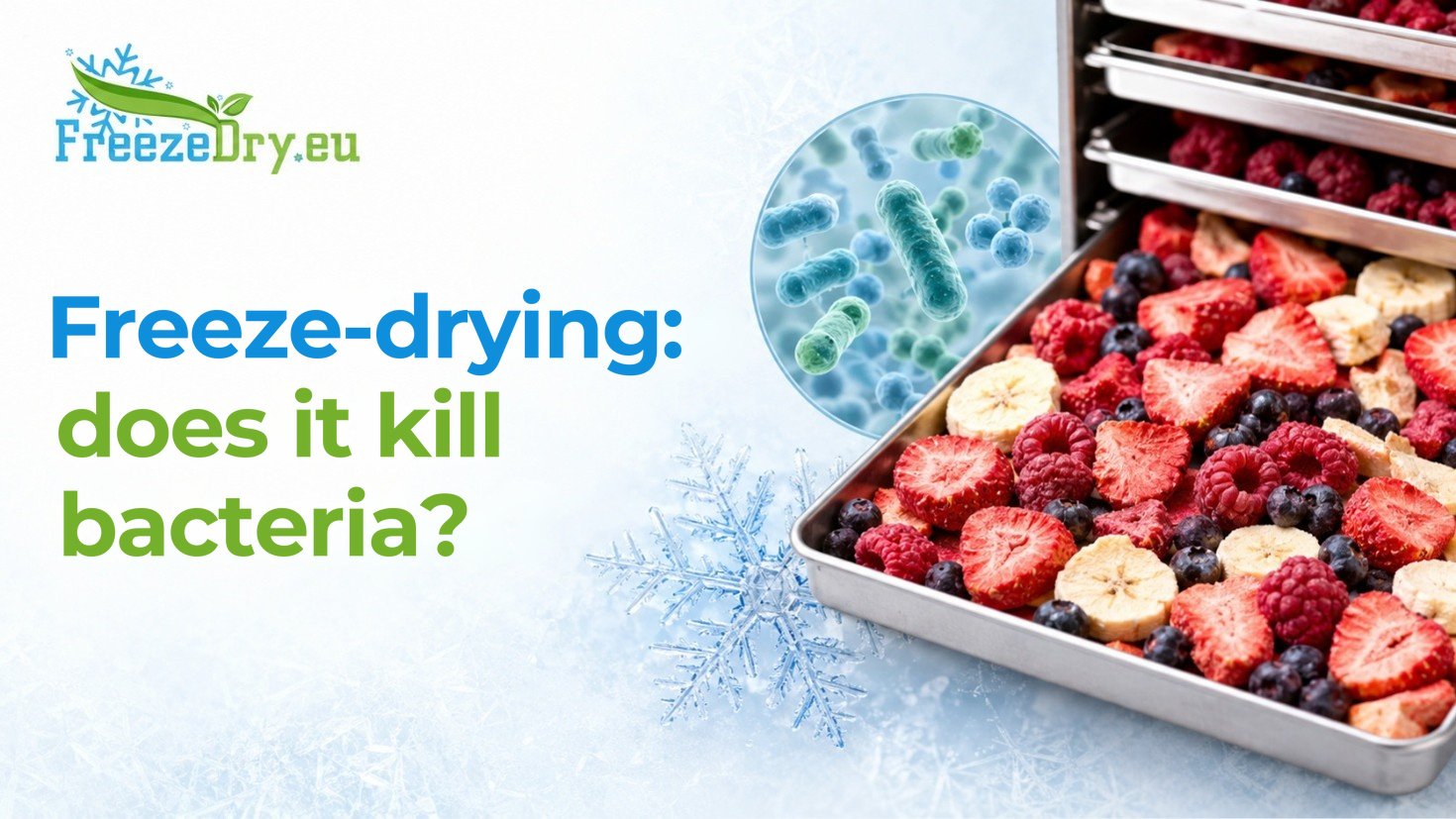
The short answer is no; freeze-drying cannot be considered a method for killing bacteria or sterilizing food. The combination of cold, vacuum, and moisture removal halts the growth of microorganisms, but some of them may remain viable. If the product is re-exposed to moisture, the bacteria may become active again.
This does not mean that freeze-dried food is inherently unsafe. When properly prepared, thoroughly dried, and stored in an airtight container, it can retain its quality for a very long time. However, its safety depends primarily on the condition of the product and hygiene standards prior to freeze-drying.
Bacteria go into dormancy, but they don’t necessarily die
Bacteria need moisture to multiply. Freeze-drying removes most of the moisture from the frozen product, creating conditions that are unfavorable for microorganisms. They can no longer actively multiply and spoil the food at the same rate as they would in a fresh product.
However, moisture removal is not the same as heat treatment. While some bacterial cells may be killed during the process, a reduction in their number does not guarantee the safety of the product. Microorganisms such as Salmonella can survive both freezing and drying. It is no coincidence that freeze-drying is used in laboratories to preserve microbial cultures. Once they have water and the right temperature, they can become active again.
A Freeze Dryer does not make unsafe food safe
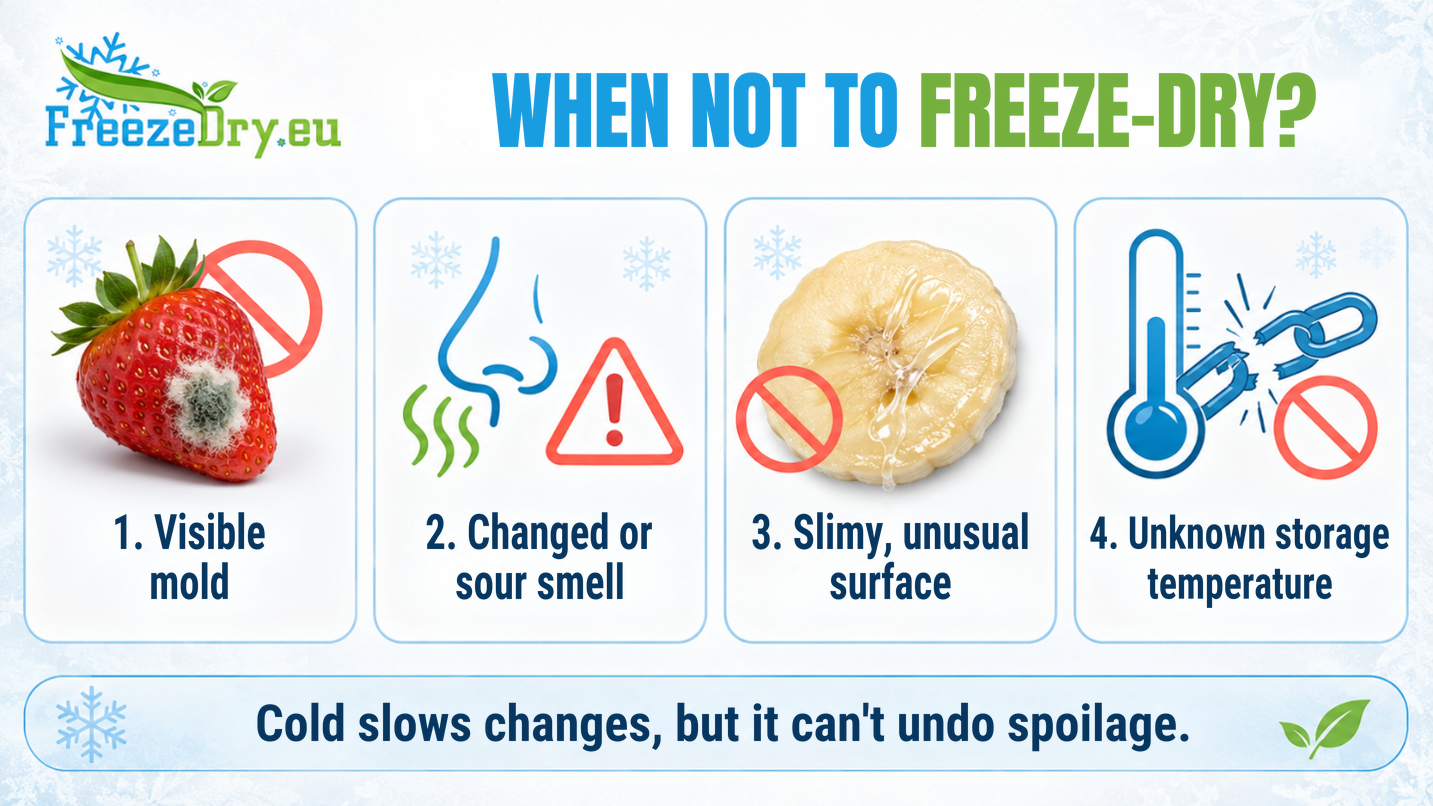
One of the most dangerous mistakes is to assume that you can put products of questionable quality into a freeze-dryer and that the process will “clean” them. Only fresh, properly stored, and safely prepared food should be freeze-dried.
If meat, fish, dairy products, or a prepared dish has been left at room temperature for too long, freeze-drying will not solve the problem. It also does not remove all substances that may have formed as a result of microbial growth. A change in smell, color, or texture is a reason to discard the product, not to try to preserve it. A simple rule: freeze-dry only what you would safely eat before starting the process.
What should you do with meat, fish, and eggs?
Products of animal origin require special attention. Raw meat, poultry, fish, and eggs remain raw after freeze-drying. Their moisture content and texture change, but they do not become cooked or microbiologically safe. The most convenient solution at home is to fully cook meat, poultry, and eggs before freeze-drying them. In this case, after rehydration with water, the dish is easier to prepare for consumption.
If you choose to freeze-dry raw foods, they must be clearly labeled. Once rehydrated with water, such foods should be prepared with the same care as fresh raw foods. It should not be eaten raw or mixed with food that has already been prepared.
For eggs, it is safest to use pasteurized eggs or to cook them before freeze-drying. Raw freeze-dried egg powder should not be added to puddings, creams, or other dishes that will not be heated afterward.
Vegetables and fruits should also be washed
Plant-based products are not sterile. Their surfaces may contain soil, microorganisms, and other contaminants, so fruits, berries, greens, and vegetables must be thoroughly washed under running drinking water. Any damaged, rotten, or moldy parts must be removed. It is best to discard soft fruits that are completely covered in mold rather than just cutting out the visible spot. Freeze-drying a product contaminated with mold will not make it safe. It is important to dry the washed products, prepare them using clean utensils, and place them on trays as quickly as possible. If they are not to be freeze-dried immediately, they should be stored in the refrigerator or frozen until the process begins.
Cross-contamination can ruin an entire batch
If the same utensils are used to cut raw chicken and prepared food, bacteria can be transferred to the safe food; therefore, you should use a separate cutting board for raw meat, wash your hands thoroughly, and disinfect work surfaces.
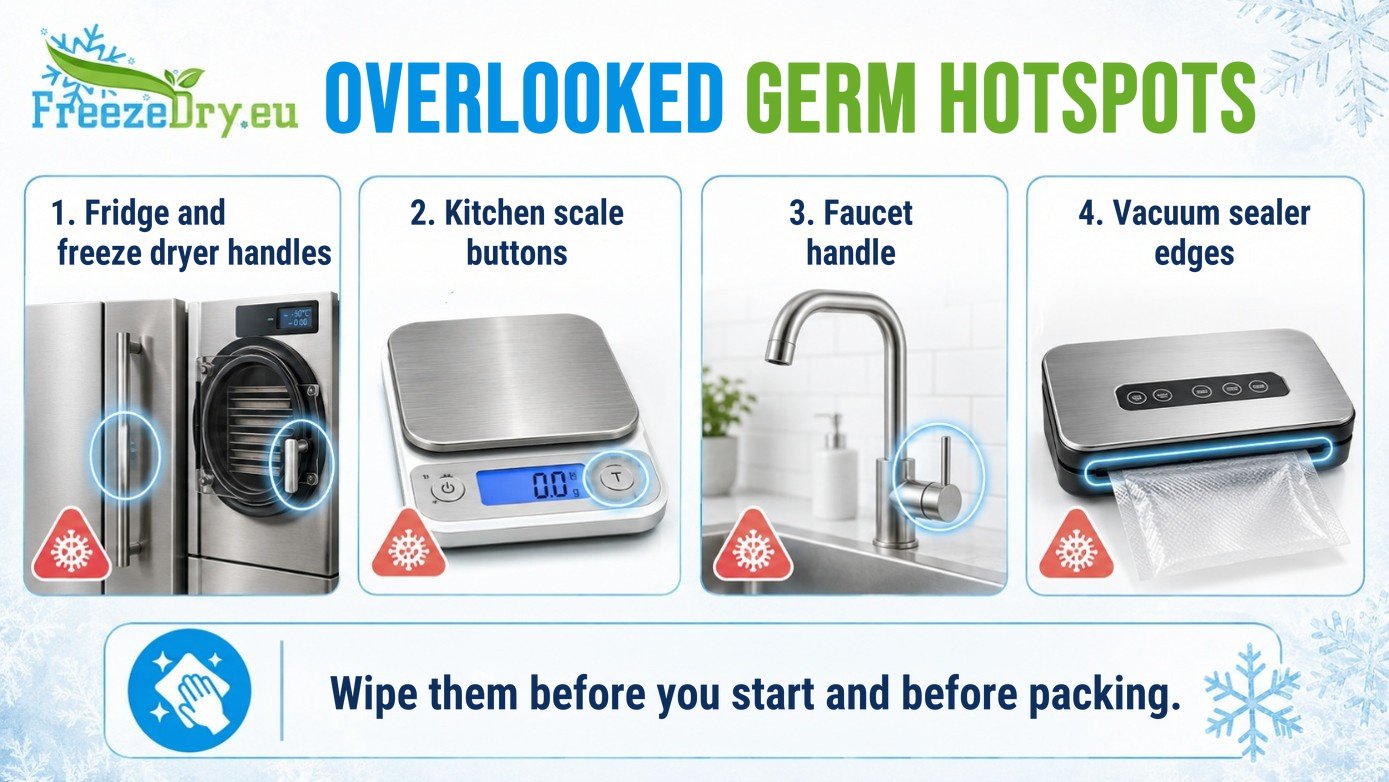
The Freeze Dryer chamber, trays, door gasket, and drainage system must also be clean. Once the cycle is complete, products should be removed with clean, dry hands or utensils. Even completely dry food can become contaminated during packaging. It is best not to place raw and ready-to-eat products in the same batch. This facilitates hygiene control and reduces the risk of cross-contamination.
Moisture can reactivate any remaining bacteria
Bacteria cannot actively multiply in a fully freeze-dried product, but the situation changes if the package lets air in or if the food was not completely dried. Therefore, at the end of the cycle, you should check the thickest pieces. There should be no cold, soft, or moist spots inside them.
Products must be packaged immediately using moisture- and oxygen-resistant packaging. Opened packages should be protected from moisture, and thawed food should be treated like a regular fresh meal: store it in the refrigerator and consume it promptly.
Freeze-drying is an excellent method for preserving food, but not for disinfecting it. The Harvest Right freeze-dryer helps remove moisture and slow down spoilage, but the most important factor in food safety remains the person—their choice of ingredients, cleanliness, heat treatment, and proper packaging.


