Based on FreezeDryingMama, adapted and modified by FreezeDry.lt team
Freeze-dried yogurt bites – healthy, protein-packed snacks that can be enjoyed anytime, anywhere. Made from creamy yoghurt and natural fruit, freeze-dried until crisp, light and intensely flavoured.
This process not only preserves vitamins, calcium and protein, but also allows the product to be stored without refrigeration for months or years. It’s a great choice for travelling, children’s snacks, sports or for those who want a healthier alternative to sweets.
“It’s the kind of food that keeps fresh without refrigeration. Freeze-dried yoghurt bites stay crunchy but melt like a puff of clouds as soon as you put them in your mouth,” says a member of the FreezeDry.eu team.
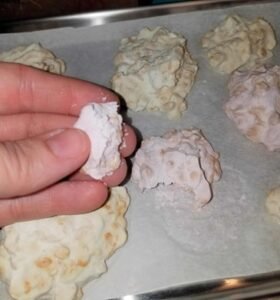
Source FreezeDryingMama
What is special about the freeze-drying process?
Freeze-drying is a technology that removes moisture from food without damaging its texture or taste.
The process involves three steps::
- Freezing to -40 °C turns yoghurt into ice.
- Vacuum dehydration, so that the water passes directly from ice to vapour (sublimation).
- Final drying, when the remaining moisture is removed and the product becomes light, crisp and long-lasting.
This process is easy to accomplish at home with the Harvest Right freeze-dryer, which is available in Lithuania from our website, FreezeDry.eu.
Why freeze-dried yoghurt bites are worth a try?
Freeze-dried yoghurt bites are more than just a tasty snack. It’s a modern way to enjoy natural yoghurt that retains all its valuable nutritional properties but is crisp, light and long-lasting.
This process makes it possible to create a product that is suitable for both children and adults: from the breakfast table to the mountain hiking backpack.
- A natural and healthy snack. No preservatives, colourings or added sugar.
- Long shelf life. Lasts up to 25 years if stored properly.
- Lightweight and compact. Perfect for travelling, hiking or working.
- Retains nutritional properties. Studies show that freeze-dried food retains up to 95% of its nutrients.
- Versatile use. Serve as chips, may be added to smoothies, oatmeal or desserts.
How to make freeze-dried yoghurt bites
Although freeze-drying sounds like a complicated technological process, yoghurt bites can be easily made at home: in a simple way, no special culinary skills required. The key is to prepare the products properly and follow a few basic rules. The result will surprise you: crunchy, flavourful, colourful and nutritious snacks that are suitable for both children and adults
Choosing the right ingredients
Use Greek yogurt – it’s thicker and richer in protein.
Additionally, you can mix in:
- fresh fruit (strawberries, blueberries, mango),
- honey or maple syrup,
- vanilla extract or a pinch of cinnamon.
For a vegan option – coconut or almond yogurt works well.
Preparing the mixture
Mix the yoghurt, fruit and your choice of additives until smooth.
The mixture can be:
spooned onto baking paper as small ‘biscuits’,
or spread in a single layer (about 1-1,5 cm thick) and then cut into pieces.
For a more interesting texture, add granola, nuts or seeds. This makes a crunchy, hearty snack.
Freeze before drying
Place the prepared yoghurt bites in the freezer for at least 8-12 hours. Pre-freezing ensures that the mixture sets evenly and does not lose its shape during drying.
Freeze-dry
Place the frozen bites in a Harvest Right freeze-drier.
The device will automatically perform the freezing, vacuum drying and final drying steps.
Packing
Once the yoghurt bites become dry, crunchy and completely cold:
- Place them in Mylar bags or glass jars with tight-fitting lids.
- Add an oxygen absorber (O₂ absorber).
- Store in a dark, cool place at temperatures below 20 °C.
The bites will stay preserved for up to 2 years without any loss of taste or texture..
Flavours and recipe ideas
Freeze-dried yoghurt bites – a creative space for experiments. Every combination of ingredients can create a new taste, smell and even texture. Whether you like freshness or mild sweetness, freeze-drying can preserve the natural aroma and colour of the fruit.
Sweet variations:
- Strawberries + vanilla + honey.
- Blueberries + maple syrup + chia seeds.
- Mango + coconut flakes.
Savoury variations:
- Greek yoghurt + dill + pinch of salt.
- Yoghurt + lemon + garlic (great snack with vegetable chips).
How many calories are in yoghurt bites?
An average portion (approx. 20 g) contains:
| Nutritional value | Amount |
| Calories | ~70 kcal |
| Protein | 6–8 g |
| Calcium | 15% of the daily recommended intake |
| Vitamin C | 10–12 % of the daily recommended intake |
It’s the perfect snack for people who work out, children, or anyone who wants a guilt-free sweet treat.

Source FreezeDryingMama
Tips for serving
Freeze-dried yoghurt bites are not only a healthy snack, but also an aesthetically pleasing dish that can be used in many ways. They go with both breakfast bowls and desserts, making them suitable for all occasions, from a daily snack to a festive table.
- For breakfast – mix with granola or porridge oats.
- For a snack – have it with nuts or dried fruit.
- For dessert – drizzle with melted chocolate and sprinkle with coconut flakes.
- For summer – use as a topping for ice cream or smoothies.
Freeze-Drying Equipment – Your Essential Kitchen Assistant
Freeze drying has been made available at home with Harvest Right technology.
The devices:
- enable the drying of yoghurt, fruit, vegetables, meat or even soups,
- have automatic modes,
- operate quietly and economically.
FreezeDry.eu is the official representative of Harvest Right in Lithuania. Our team provides expert consultations, helps you choose the right model and offers full technical support at every stage.
“Our goal is for every customer to experience the benefits of freeze-drying in their own kitchen. Yogurt bites are the perfect place to start,” concludes FreezeDry.eu.


