Based on FreezeDryingMama, adapted and supplemented with information from the FreezeDry.lt team
Soup has long been considered one of the simplest yet most nutritious dishes. It provides a sense of warmth, fullness, and comfort, but did you know that soup can be preserved for up to 25 years? This is made possible by freeze-drying.
Modern Freeze Dryers (such as Harvest Right) make it possible to carry out this process right at home. This is especially convenient for those who want to stock up for emergencies, trips, hikes, or even their own business.

Photo by FreezeDryingMama
Why freeze-dry soups?
Soups are one of the best foods for freeze-drying because they:
- Retains flavor and aroma. During freeze-drying, only the water is removed, so all flavor characteristics remain unchanged.
- Reduces waste. You can save your leftover lunch and reheat it later without any additives.
- It has a long shelf life. When stored properly (in airtight packaging with oxygen absorbers), the soup can last up to 20–25 years.
- Preserves nutritional value. Studies show that freeze-dried food retains up to 95% of its vitamins, minerals, and antioxidants.
- Takes up less space. Once the water is removed, the product becomes extremely light and compact, making it an excellent choice for travel or as a backup supply.
According to the FreezeDry.lt team, soups are often the first choice for those who want to try freeze-drying.
“Soups are versatile. They’re easy to prepare, easy to rehydrate, and always provide a sense of comfort. Freeze-dried soups are perfect for both travel and emergencies. It’s the kind of food you always want to have on hand.
What kinds of soups can be freeze-dried?
In short, almost all of them. The only condition is that the soup shouldn’t contain too much fat, as fat takes longer to dry and shortens the product’s shelf life.
Most popular options:
- Chicken noodle soup —a classic that warms both the soul and the body.
- Vegetable or pumpkin cream soups —nutritious, thick, and filling.
- Tomato soup – it retains its flavor perfectly even after many months.
- Mushroom or cream soups —smooth and flavorful.
- Stews and chili soups —perfect for the winter season or camping trips.
- Seafood soups – a more exotic choice for foodies.
The only thing you should avoid is very rich stews with lots of sour cream or butter, because they take longer to dry.
How do you prepare for freeze-drying?
For the freeze-drying process of soup to be successful, proper preparation is key. Every step, from choosing the soup to the final packaging, affects the product’s quality, taste, and shelf life.
Choose the right soup
You can use either homemade or canned soup. The most important thing is that it be fresh, without excess fat or artificial thickeners. Fat hinders the drying process because, unlike water, it does not freeze solid during freezing, which can complicate the sublimation process.
If the soup is very rich (e.g., seasoned with sour cream or butter), it is recommended to remove some of the fat layer or dilute it with broth before drying.
It is recommended to choose more natural recipes—soups made with chicken, vegetables, pumpkin, tomatoes, or mushrooms. Not only do they freeze better, but they also retain their flavor without any additives.
Experience shows that natural soups with lower starch and fat content freeze-dry more evenly and remain edible for a longer period of time.
Divide the soup among the plates
Pour the soup into stainless steel or special Harvest Right trays, spreading it evenly. The recommended layer thickness is up to 1.5 cm.
A layer that is too thick slows down the process because the inner part of the mixture freezes and dries more slowly. Also, the soup expands slightly during freeze-drying, so do not fill the trays all the way to the brim.
To ensure even drying:
- Stir the soup before serving so that the ingredients are evenly distributed.
- Make sure the tray is level so the soup doesn’t spill to one side.
- If the soup is too thin, you can put it in the freezer for a short while until it starts to thicken. This will make it easier to serve.
Freeze the soup before drying it
Although some Freeze Dryers have an automatic freezing stage, pre-freezing is highly recommended.
This allows you to:
- reduce the overall duration of the process (by 20–30%),
- to prevent bubbling or “spilling” when the pump starts up,
- improve texture – the food retains its original shape.
Freeze the soup for at least 12 hours or until it is completely frozen. It is best to freeze it at –20 °C or lower.
Place in the Freeze Dryer
Once the soup trays are prepared and frozen, place them in the Harvest Right Freeze Dryer.
This device automatically performs all processes:
- freezes at –40 °C or lower,
- creates a vacuum,
- gradually heats the trays, allowing the ice to turn into steam,
- collects moisture into the internal ice condenser.
Recommended settings for the Harvest Right device:
- Automatic (usually 24–34 hours).
If the soup is very thick, you can add an extra 2–3 hours in the “Extra Dry Time” stage to ensure that all the ingredients are completely dry.
Check the result and pack it up
After drying, check the condition of the soup. It should be light, crispy, and completely dry.
Take a single piece and try to break it. If it breaks rather than bends, the product has dried properly.
Next, follow these steps:
- Break the soup into pieces or crumbs. This will make it easier to pack.
- Place them in Mylar bags or airtight glass containers.
- Add oxygen absorbers (O₂ absorbers). They prevent oxidation.
- Seal the bags using a heat sealer.
- Please note the date and contents of the package.
When stored properly, freeze-dried soup will keep for up to 25 years. It is recommended to store it in a dry, dark, and cool place (at a temperature of up to 20 °C).
A tip from the FreezeDry.lt team: “Place a small amount of rice or silica gel packets inside the package. They will help absorb any remaining moisture and further extend the product’s shelf life .”


Photo by FreezeDryingMama
How does a Freeze Dryer work?
Harvest Right freeze-dryers operate on a simple yet ingenious principle.
The process consists of three stages:
- Freezing. Food is frozen to –40 °C or even lower.
- Vacuum drying. A special pump creates a vacuum, and heat waves cause the water to evaporate directly from the ice. This is called sublimation.
- Final drying. The last traces of moisture are removed, and the product becomes completely dry while retaining its shape and color.
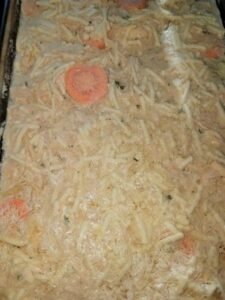
Photo by FreezeDryingMama
The end result is a light, crispy, yet hearty soup that can be prepared in just a few minutes.
Where can I purchase freeze-drying equipment?
FreezeDry.lt is the official representative of Harvest Right equipment in Lithuania. We are the only company in the country authorized by the manufacturer and supported by its technical services.
Harvest Right freeze dryers combine:
- the principles of healthy eating,
- innovative technologies,
- sustainability concepts.
This equipment is suitable for homes, farms, and food production businesses alike.
“Our goal is not just to sell a device, but also to provide the knowledge needed to get the most out of it. We want every customer to feel confident that they are investing in a long-term, reliable, and healthy solution “,” says the FreezeDry.lt team.


