
A freeze dryer offers many options for preserving fruits, vegetables, meat, dairy products, and even prepared meals. However, it is not a universal device capable of drying any food equally well. During freeze-drying, water is removed from the frozen product, but fats, sugars, and other ingredients remain.
For this reason, some products become light and brittle after freeze-drying, while others remain sticky, greasy, or retain their original structure entirely. While it is technically possible to freeze-dry certain products, the process takes a long time, consumes a lot of energy, and the end result does not justify the cost.
Pure fat is not suitable for freeze-drying
Freeze-drying removes water but does not remove fat; therefore, oil, clarified butter, lard, and other products consisting almost entirely of fat are not suitable for freeze-drying. Placing them in the freeze-drying chamber will not result in any change, as they do not contain enough water to be frozen and removed through sublimation.
High-fat foods can also pose challenges. Peanut butter, nut butters, chocolate, rich sauces, or dishes heavily seasoned with butter may remain soft and greasy. Even after the moisture is removed, the fat remains and may oxidize over time, giving the product an unpleasant smell and taste.
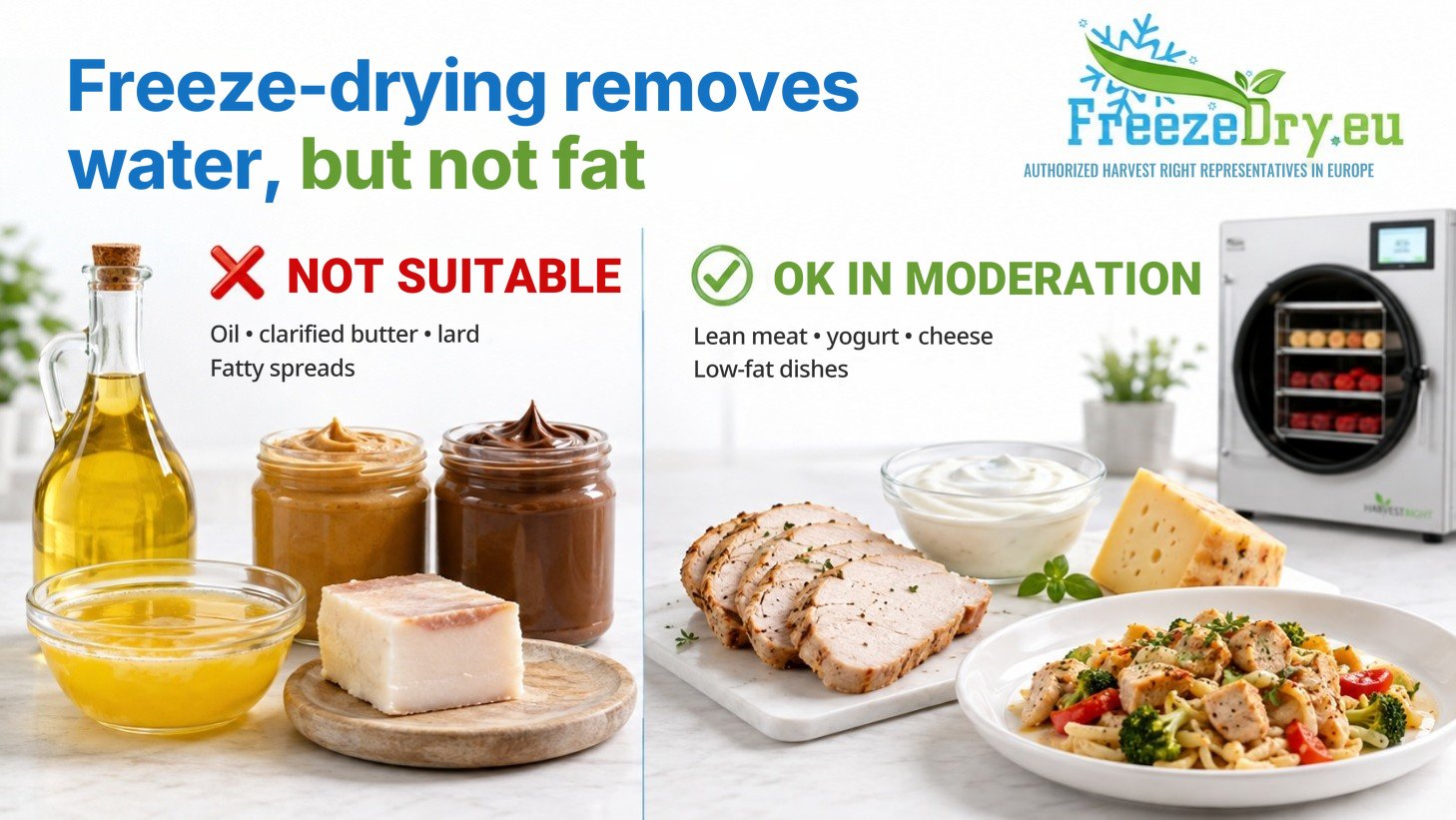
This does not mean that no food containing fat can be freeze-dried. Lean meat, yogurt, cheese, or a dish seasoned with a small amount of oil can be freeze-dried, but the more fat a product contains, the shorter its shelf life and the poorer the results you can expect. It’s a good idea to trim excess fat from meat before preparing it.
Products high in sugar may remain sticky
Sugar lowers a product’s freezing point and strongly binds water, so very sweet products may freeze and dry out more slowly. Honey, syrups, thick jam, caramel, and some sweet creams often do not become dry and brittle even after a long cycle. For example, honey and syrup contain water, but the high concentration of sugar hinders proper freezing. Once the process is complete, the product may remain sticky, tacky, or stick to the tray. In such cases, a significant amount of time and electricity is wasted, and a result suitable for storage is not achieved.
However, it cannot be said that all sweets are unsuitable. Certain types of gummy candies, chewy candies, or other confectionery products are freeze-dried precisely because of their interesting, puffy, and crunchy texture. The result depends on the specific composition of the product, so it’s best to test new sweets in small batches.
Chocolate and high-fat baked goods
Pure chocolate contains little water and a lot of fat and sugar, so the freeze dryer has nothing to remove from it. A chocolate bar will essentially remain a chocolate bar after the cycle. However, as the trays warm up, it may soften or smear. Complex desserts are evaluated based on their composition. A cheesecake or a slice of cake can be freeze-dried because it contains a fair amount of water, but a rich cream, chocolate glaze, or thick layer of butter may remain greasy. If you plan to store the dessert for a long time, it’s better to choose recipes with less fat and conduct a small test run before starting the full cycle.
Freeze-drying should not be viewed as a way to give all baked goods a very long shelf life. The final shelf life is determined not only by the moisture that has been removed, but also by the fat content, the packaging, and the storage temperature.
Mayonnaise and fatty sauces
Mayonnaise, salad dressings, and other fatty emulsions are generally not a good choice. They contain a lot of oil, so when some of the water is removed, a fatty mass remains that can separate and be difficult to restore to its original consistency. A similar problem can arise with sauces based on cream, butter, or cheese. Some of them can be freeze-dried, but the rehydrated product won’t necessarily be the same as the fresh version. The sauce may clump, separate, or become grainy. Better results are often achieved by freeze-drying less fatty broths, tomato sauces, vegetable purees, or soups.
Alcoholic and carbonated beverages
Alcohol freezes at a lower temperature than water, so alcoholic beverages may not freeze sufficiently. Furthermore, volatile substances behave differently in a vacuum than plain water. Due to the potential for equipment damage and safety risks, alcoholic beverages should not be freeze-dried without first checking the specific manufacturer’s recommendations for the equipment. In theory, carbonated beverages can first be “decarbonated” and then frozen, but this is usually impractical. The sugar they contain complicates the drying process, and the final product may not be worth the lengthy cycle. It is easier to prepare fresh beverages from separately freeze-dried fruit, berries, or juice powders.
Uncut and overly thick items
Sometimes the problem isn’t the item itself, but its shape. A whole apple, a large tomato, a thick piece of meat, or a very deep layer of soup should not be placed directly into the freeze dryer. The surface may appear completely dry, even though there may still be ice or moisture inside.
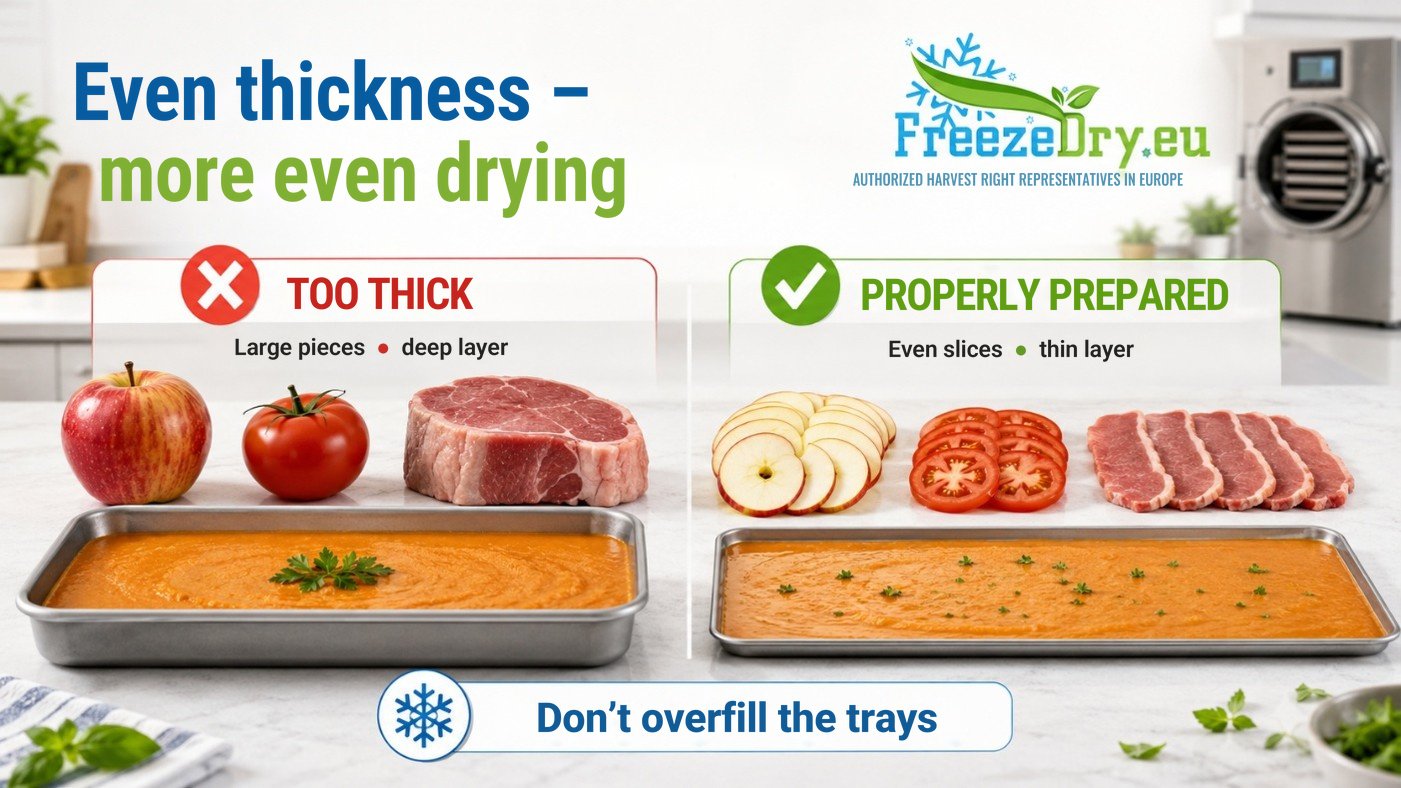
Large items should be cut into pieces of uniform thickness, while liquid dishes should be spread in a thin layer on the tray. It is sometimes helpful to score or pierce fruit skins, as they do not let moisture through easily. Overfilling the trays can also prolong the cycle and lead to inconsistent results.
Food that is spoiled or unsafe must not be freeze-dried
Freeze-drying does not make spoiled, contaminated, or improperly stored food safe. The process is not sterilization. Microorganisms may survive and become active again once the product is rehydrated. Nor does it remove toxins from mold or poisonous mushrooms.
Only fresh, safely prepared food should be freeze-dried. Raw meat, fish, and eggs can be freeze-dried, but they remain raw and must be properly cooked before consumption. If you want a quick-to-prepare meal, it’s safer to boil or bake the meat or eggs before freeze-drying them.
The best results are achieved by choosing products that contain enough water but not too much fat or sugar. Fruits, vegetables, lean meat, most dairy products, and properly prepared dishes usually freeze-dry successfully. It’s a good idea to start by testing an unfamiliar product with a small portion. This will allow you to assess its texture, the drying time, and whether the result is worth the time and energy spent.


